A podcast where we talk about fascinating films we find captivating! You can find any writing stuff we publish here.

Tuesday, July 8, 2025

Varying Definitions of Fun: Parker's 2025 Junesploitation

I did it! I did Junesploitation again! And boy do I have stories to tell...

Cutting the formalities of last year (when I had to fit into a word limit and consider audience), here's the original challenge link if you don't know what this is. And here's my article from last year.

This year, I started early (literally the day the calendar dropped) and ended a full week into July. To make up for this, 90% of my picks were great, it was just difficult finding time to watch them.

This article was written over the course of the challenge, and while I have write ups of everything I watched, only the best passages actually made it into this article. 

Honorable mentions: Petey Wheatstraw, Through the Looking Glass, Fleshpot on 42nd Street, All the Colors of the Dark, Dawn of the Dead, Amazon Women on the MoonThere's Nothing Out There!, Rock and Rule, Runaway Train, Abruptio

David Carradine: Q (1982)

A normal persons expects trash from this. Just expect cops doing cop things, a seedy urban environment, and a regular citizen to upend the system. Right?

Please. You’re watching this for the claymation reptilian thing living in the city. All that stuff in the previous bit is in there, though, and it’s done pretty well. Enough to solicit a social commentary on the little guy suddenly gaining a massive amount of power and navigating a corrupt system. Unfortunately Michael Moriarty’s character is so damn unlikable it’s hard to go with it. 

Mercifully, David Carradine is good as the straight face investigator and all the bits involving the creature are exactly what you expect. In fact, Larry Cohen only gradually shows the creature throughout the film, partially because of budget, but mostly because it’s scary to think of a large bird lizard randomly biting off heads. Maybe this technique clashes with the fact that the entire film takes place in broad daylight, but it’s effective nonetheless. 

Heists: How to Steal a Million (1966)

Guys, I love Audrey Hepburn. I even found a Breakfast at Tiffany’s poster at an anime con! Seeing this heist category allowed for a perfect opportunity one of her few post-Classic Hollywood films.

The script could be tightened up - the build up to the actual heist takes a while, and some of the timing and pacing is strange. It also isn’t nearly as suspenseful as some of her other films from this era (specifically Charade and Wait Until Dark), which could be excused as this isn’t a “thriller” (shouldn’t I be nervous during the heist?). That aside, How to Steal a Million is still a fantastic little movie, with loads of beautiful shots, decadent sets, and an amazing cast. Peter O’Toole is charming yet conniving conman, and Hugh Griffith as Hepburn’s father/forgery master is a joy to watch. All of these characters have such classy interactions (the kind which are synonymous with “old Hollywood”), and underneath that you can forget they are all committing or complicit in several crimes. You find yourself thinking about the moral rights and wrongs of everything taking place, inevitably coming to the conclusion that maybe this film isn’t quite as shiny as it may seem. 

Jess Franco: Eugenie (1970)

Not my favorite Franco, and not even my favorite De Sade adaptation of his (despite my lack of actually reading his works). That being said, I still enjoyed Eugenie, and would consider it quintessential to getting into his filmography. Full of non-conventional sexual desires, soft focus lens, and beautiful long shots of a gorgeous island location, it’s a beautiful film that certainly makes you think about your own preferences. 

        How did he keep his actors so fashionable? Is that why Christopher Lee signed on - so he could be well dressed during inexcusably taboo scenes he is present for? Or was it because he was friends with Franco? Regardless, his presence is welcome here amongst a sea of undeniably depraved characters.

Christ, Jess Franco might be the reason I start reading De Sade. I have a feeling I’m not the first person to say that.

‘90s Action: Fortress (1992)
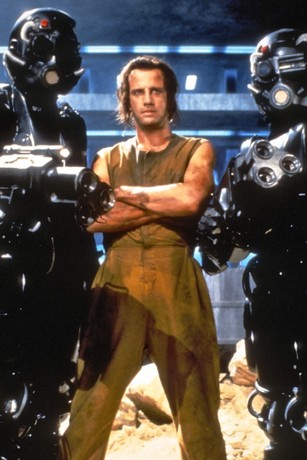
I’m surprised Stuart Gordon never quite got the break he deserved, despite putting out a consistent filmography in his directorial career. There are multiple instances he took an alright script and made it entertaining; this may be the strongest example, as it lacks the involvement of Dennis Paoli and Brian Yuzna.

        If Omni Consumer Products succeeded in their plan to create the most efficient cop ever, this is where their caught criminals would go. Coincidentally, Kurtwood Smith stars in this as the prison warden. Like RoboCop, this also preaches the dangers of technology taking over our society, and watching either nowadays is frightening, so much so that you forget the low budget. Christopher Lambert is the everyday man here, jailed simply for reproducing and exasperated by the state society is in. Alongside a healthy supporting cast (including Jeffrey Combs and Tom Towles!), Lambert manages to shine among them as he learns his ways around a metaphorical hell - and how he can escape. Throw in some mind control commentary (again, watching this during the rise of AI is horrifying) and body horror, and you have one hell of a movie.

Revenge: The Cook, the Thief, his Wife, & Her Lover (1989)

Not often a film gives you an adrenaline rush from being so damn good. Please, release a 4k of this. Someone.

        A famously depraved film, you cannot deny that Peter Greenaway is operating simultaneously on God mode and Freak mode. Beyond the fact that it's a beautiful film in every visual category imaginable, I find the unlikable characters' dynamics so wonderful; they are repugnant in so many senses, yet they collide in the most cathartic way. 

        I think many people my age may see the title, hear the plot, and go into this thinking there will be an obvious black and white revolution situation, an "eat the rich" narrative if you will. While that may be true in some capacity, there is so much more to read into. I’ve seen this combined with religion, politics, and consumerism. Why not all at once? It works so well with each of those categories (never mind their undeniable overlap), to a point where it is hard not to view this as a decadent orgy of all three, culminating in the most satisfying ending I’ve ever seen.

Free Space: Righting Wrongs (1986)
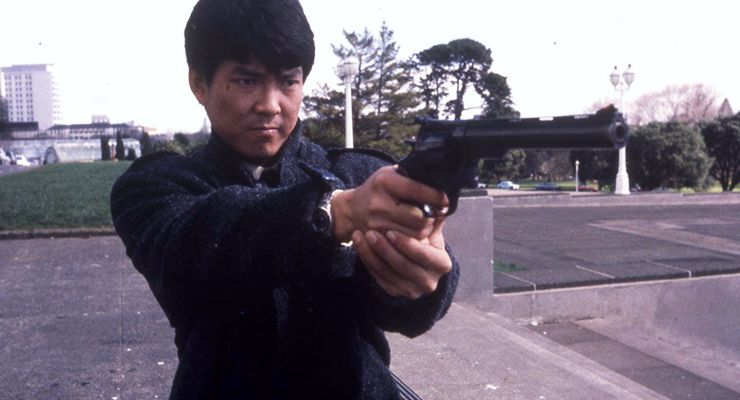
Hong Kong continues to dominate the “tonal whiplash” department. I feel like most of the time if a film is entertaining enough, I really don’t care if it has a particular mood, just how it handles its subject matter. And on that front, Righting Wrongs delivers. Here, corruption runs rampant both in the police force and in the courts. Prosecutor Yuen Biao and cop Cynthia Rothrock are sick and tired of it, but have different definitions of “corruption”. Enter conflict.

The choice to have two morally ambiguous leads who want to do the right thing, but continually butt heads when they come across each other could be potentially fatal. And while I don’t understand every aspect of the plot, I do think this adds a bit more complexity to the story, allowing it to stand up to heavyweights like Police Story and Hard Boiled. Plus, the action is top notch, which helps its case even more.

Exploitation Auteurs: The Devil In Miss Jones (1973)

        Guys, what the hell does this category mean? My mind went to the literal definition of exploitation, leading to Deep Throat and the mistreatment of Linda Lovelace. Then I remembered “oh, Gerard Damiano did other stuff” and came to Miss Jones. Do I need help?

I was very shocked to like this; it’s graphic, but delves deeply into sexual desire in a frank and oddly spiritual way. Using the circles of hell and the seven deadly sins is by no means an original way to explore religion and repression, but it’s odd to see it so well incorporated into a hardcore film. Plus it isn’t related to trauma, just a woman who lived a decidedly puritan (albeit unhappy) lifestyle up until her suicide. I think the choice to start with the ending is bizarre, and some of the cuts to hardcore shots are jarring, but it’s a perfect mix of being masturbation fuel and watchable for an actual plot. Also, shockingly dreamy; running at a tight 66 minutes, there is no explanation for why Miss Jones ends up where with whom but it doesn’t really affect the film that much, nor does it infuriate the viewer. If anything it adds to the surrealistic concept of a woman brought back to life solely to experience lust, floating around to various partners and scenarios to explore herself. 

        Hopefully this gets a good release soon. I really think this deserves it, even if Damiano's name will forever be connected to Deep Throat.

Hong Kong Action: Miracles: The Canton Godfather (1989)

Probably should have stayed with Who Am I? for this category. I was prepared for a lack of action, but dammit this thing begins to drag no matter how nice it looks or how enjoyable Chan and his surrounding cast are. 

        Despite the length, there is always something engaging to look at, satiating any potential boredom that many cite watching this. Setting this in the 1930s and adapting something decidedly uplifting is just so warming to me. Chan has always been a police officer in my mind thanks to Police Story, Crime Story, The Protector, and more, so it was nice to see him on the other side of the law. Even with the opportunity to play against type, he remains a good hearted figure, wanting peace and only beating ass when provoked. It may be less action oriented, but that didn’t stop me from feeling happy at the end. 

Eurosploitation: Mondo Cane 2 (1963)

Someone let me do a research paper on shock media. Please. I beg you. This was too fascinating to not feel inspired by. I'm sure that says a great deal about me.

        Despite my view of Mondo films and their derivatives being the purest form of exploitation, I nearly slept through the original Mondo Cane. I expected a similar experience here; fortunately I was proven wrong. This film does not feature the coherence of the original, and I believe that is to the film’s benefit. The contents of Mondo Cane 2 are much more bizarre, with the strangest parts of the film coming from the segments taking place in the Western world. Sparing us some cultural evisceration of third world countries from other Jacopetti and Prosperi projects, Mondo Cane 2 more often than not looks at the odd facets our own hemisphere holds, allowing ourselves to ask what we truly value, and what we should be praising. Combine that with the oftentimes random content, and you have a better viewing experience, one in which you don’t feel quite as guilty for sitting through the graphic content when it does appear. Whether the scenes are real or fake, the effect is the same. I don't condone everything this film features (these things cannot keep opening with dogs...), however I can solidly say I prefer this to the original, and that this may be the best Mondo I've seen so far.

Free Space: Deadly Weapons (1974)

Lotta boob, both in size and quantity. My other experience with Doris Wishman was heightened by the presence of a friend, but I’m taking Double Agent 72 over this purely due to efficiency. Do I like Deadly Weapons? Yeah… but it fucks around too much. We spend a LOT of time hanging out not only with Chesty Morgan, but with Harry Reems and the goons he’s with. I wouldn’t mind this if it was interesting, but it isn’t (shocking considering we have the choice between a large busted woman seeking revenge and a mini gang of men who do no good). I don’t even care that the main draw of the film happens within the last 15 minutes, just make the first 60 interesting.

Wishman really knew how to direct, and I love the crappy quality of the dialogue combined with a dub. This just needs more happening and better pacing. As is, this should be no more than 30 minutes, and I don’t want to watch it for that short of time. If we got a tour of the kitschy 70’s sets and costumes that would be fine! Just do something, I beg you.

‘80s Action: Never Too Young To Die (1987)

Ending this article on something stupid. We got pre-Full House John Stamos, Gene Simmons in drag, a surprisingly high budget, and fake 007 shenanigans. Did you expect something high brow from a film with such a generic title?

It’s not a “perfect” B-movie like Hard Ticket To Hawaii is, but it has its charm. While a bit long and aiming way over its head (it apparently was intended to spawn a “Son of 007” type franchise), Never Too Young To Die never feels like it knows better than the audience. It knows it’s a standard action flick with some celebrity names attached, and while I can’t say it necessarily embraces this status, it’s still a fun watch. Plus, Gene Simmons apparently hates this thing, which is hilarious given he’s pretty fun to watch here. He’d make a good Frank-n-Furter if he wasn’t involved in that band.

Parker S.

Wednesday, May 14, 2025

WIMM Newsletter #2

Our upcoming episode features Gerald Thomas' Carry On Screaming! (1966).

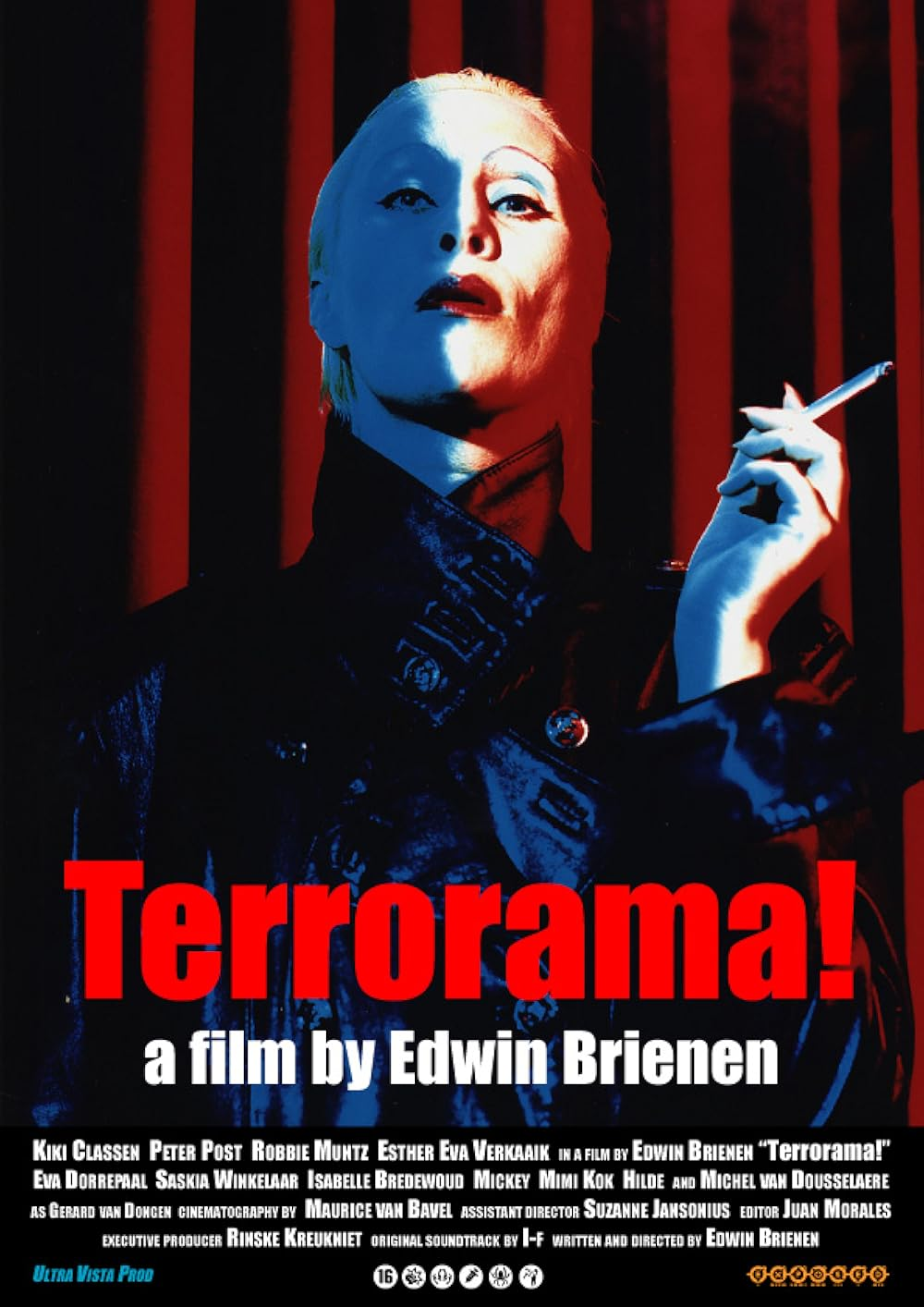
We had a change of heart and while we still love Terrorama!, we don't feel that it is the time to cover it.


Current film obsessions:


Parker: Decided to try going to an AMC with my brother. It did not fare well. Please do not go see A Minecraft Movie.


Actual things I’ve been enjoying:

She Killed In Ecstasy (1971): Don't ask why it became a Friday routine to watch either a Franco or a Jackie Chan movie, I needed the comfort of two opposing forces and wanted to either lose my mind or punch a wall. Ecstasy certainly had one of the more engaging stories from Franco; I'm a sucker for movies about medical ethics, and adding in the dreamy eroticism he's known for made this a very enjoyable watch. I am dreading the day I watch a bad movie from him, because I know it's going to be bad.


The Protector (1985): I know Jackie hated this thing so much that it inspired him to create Police Story (1985), and I don't blame him. It's almost too sleazy to involve him, and he has virtually no chemistry with Danny Aiello. That didn't stop me from having a good time. Hell, it's probably better than some of the Mainland stuff Jackie is involved with now.

Heavy Metal (1981): The teenage boy's wet dream, I hate myself so intensely for liking this, but who can resist the charm of John Candy and Squidward's voice actor? It seemed like it had things to say once you get past the boobs. Plus it has a kickass soundtrack and wonderful animation.


The Virgin Spring (1960): Happy Easter! The only way to celebrate is to watch Max von Sydow kill his daughter's rapists/murderers while questioning his entire religion, crushingly presented in a way only Bergman can. I was a tad shocked to find out that this served as the basis for The Last House on the Left (1972); I genuinely thought Wes Craven came up with the concept purely on his own. Guess not, and now I have to go cover that blindspot to properly form an opinion.


The Heroic Trio (1993): Beyond bonkers wire-fu with some serious Hong Kong legends in tow, I had so much fun and propose that this is how all action movies be made. It doesn't always make sense, and every set has smoke and bright lighting, but by the time I watched this I just bought into the fantastical elements due to my own mental state. Props to Criterion/HBO Max for having the proper unrated edition involving the cannibalistic children.

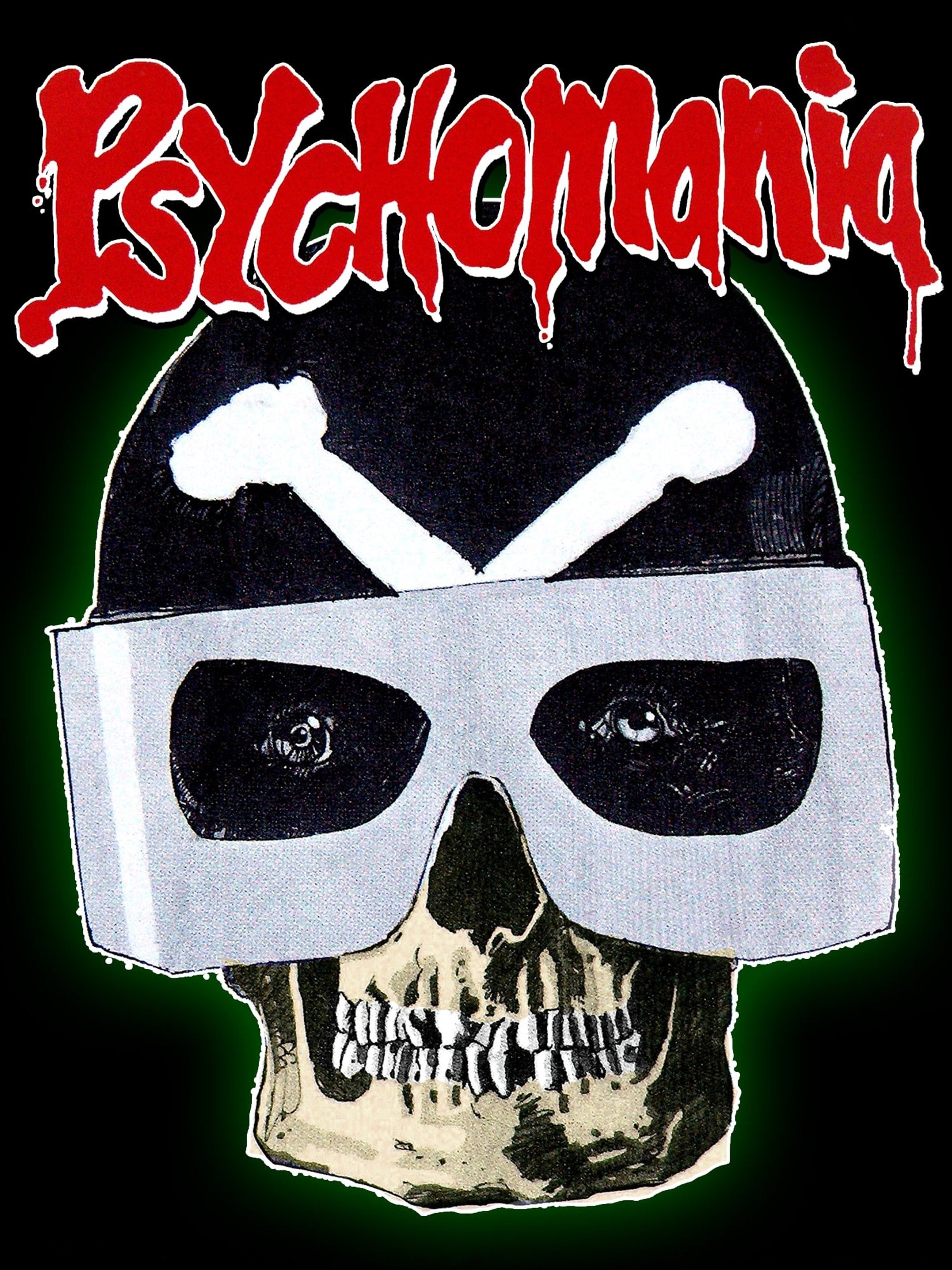
Ryan: Providence (1977) w/Bogarde/Burstyn/D.Warner/Gielgud set the month into a good state of being. Followed with Psychomania (aka The Death Wheelers) with Matt and Graham of Man v. Film. Anticipating the degree of strange and surreal was impossible in advance; the film is pure bonkers fun with a fiesty score and set design resembling the clean clinical look of A Clockwork Orange. Doctor X was the most in depth film I've enjoyed with the commentaries filling in most any detail asked for.


Current music obsessions:


Parker: April is hell month for college students. I’ve been getting through it with Wendigoon and old severe weather newscasts, so my music-listening habits have been on the back burner a little bit.


Weyes Blood makes me so emotional it's borderline not funny. The perfect audio encapsulation of a nostalgic dream that you want to ponder further, while you cry on the steps of your house with a cigarette in your hands.

bbno$ is mostly known as dumb TikTok trend music, and it totally is. I just think he’s fun and silly, and has a perfect personality to match the complete unseriousness. If this man represents my generation I’m perfectly fine with that.


David Bowie. Blame Labyrinth and David Lynch.


Ryan: Steven Wilson's The Overview is a prog-journey through common human problems conjoined with the space exploration, often heady in spots but overall a tight 42 minute 2 song adventure that gets better with each listen. I've waited years for a new VNV Nation album, and Construct is everything most fans could've desired, with typical upbeat pounding joy to deeply emotive and impactful songs to inspire and not give up, empowerment and strength always being at the forefront of the lyrics. Preoccupations' album Ill At Ease treads new ground, followed by Men I Trust's Equus Asinus as a comfort-listen. Lastly is a bright and cheery album from John Hollenbeck titled Colouring Hockets.


Q&A


1. What’s the scariest film you’ve ever seen?


Parker: The Changeling (1980), We Are Still Here (2015), Possession (1981), The Shining (1980), Henry: Portrait of a Serial Killer (1986). I think of those five The Shining fucked me up the most - I nearly began crying during it due to some very unpleasant flashbacks.


Ryan: A Film Unfinished (2010) by Yael Hersonski is a documentary on the discovery of WW2 propaganda film reels of the Warsaw ghetto, capturing absolutely frightening attempts to create scenes of normal activities despite the reality of what life actually is during the occupation. Most grippingly there are survivors whom unknowningly were filmed are later interviewed and shown the footage.


2. A growing trend in mainstream cinema is the needle drop. What’s your favorite instance of a commonly known song in a movie?


Parker: I fucking hate this trend. The only ones I can remember enjoying are the Bowie transitions in The House That Jack Built (2018) and Sissy that Walk's inclusion in Swan Song (2021).


Ryan: Axel F by Jan Hammer is featured prominently in Beverly Hills Cop. It also makes an unexpected appearance in Summer Rental, a film so endearing it should be more popular than National Lampoon's Vacation.


3. Sometimes we watch things as background noise. What’s one film you wish you had paid more attention to, and are dying to rewatch?


Parker: THERE ARE SO MANY. The Blood on Satan’s Claw (1971), Flow (2024), End of Days (1999), Strangers In Paradise (1984), Live Like a Cop, Die Like a Man (1976), Lorna, the Exorcist (1974), Burnt Offerings (1976), Immoral Tales (1973), Belle de Jour (1967), Vampyr (1932), and Black Tight Killers (1966) are all films I wish I could have paid more attention to, mostly because friends I know love them. Then again, many of them also love Stalked By My Doctor (2015), to which I only want to have a talk with you guys.


Ryan: Recently Tarkovsky's Stalker; it's a tricky one knowing the film re-emerges into color halfway through makes the first half full of anticipation. I've started the first half of the film more times than I would have liked and couldn't finish. It was time and I recently finished it off into a complete afternoon viewing. Sometimes a film is so good it's criminal to not complete (then again I seem to be able to complete Summer Rental with John Candy no sweat).


Again, apologies for the change of plan. 2025 has been a whirlwind and it's not even halfway over! We look forward to releasing some episodes soon now that the semester is over and Junesploitation looming above us.


Parker & Ryan


Thursday, April 3, 2025

WIMM Newsletter #1

Our upcoming episode features Edwin Brienen’s film Terrorama! (2001)

Current Film Obsessions

Ryan - Our Discord (please join please join) continues to inspire discovery of new and old films. This month we screened 2002’s The Count of Monte Cristo (a superb romp with above-average performances), The Heroin Busters (Fabio Testi and David Hemmings are sanctuary for many of us), and The American Friend with Bruno Ganz and Dennis Hopper.

Notable personal viewings this month: 

The Naked Civil Servant - John Hurt’s complex portrayal of Quentin Crisp in the 1975 film further adds to the irreverent and robust acting abilities he could tap into; a mixture of gut-wrenching pain, heart aches and survival in pre-WWII Britain. The broad message from the film is Crisp’s vigilance to be himself at all costs and be damned humanity that cannot accept his existence. 


The Cat (Die Katze) – Director Dominik Graf’s layered heist film is a superb example of taking a fairly ordinary plot but putting every finishing touch on small details that keep tension throughout. Radiance continues to chose titles that are beyond the pale and we hope more Graf films may be in the future (such as Neon City and Die Sieger). 

Torment (L’Enfer) – Claude Chabrol’s interpretation of writer Henri-Georges Clouzot rips into the fabric of characters pushed to their wit’s end becoming more and more alarming. Francois Cluzet as Paul has moments that are frightening, akin to the likes of DeNiro’s Max Cady. I had no idea later era Chabrol could be this cutting and vicious yet authentic in its depiction of the danger in human nature.  

Parker – Been knee deep in film festival judging (please go to the Southern Oasis Film Festival in my honor), but a few picks I can remember from being on break:

Carcinoma – This is the only Marian Dora film I plan on watching for the time being (mostly due to animal stuff I’m not a fan of). I grossed out my partner vaguely describing it and I’m surprised I liked it as much as I did. Worth watching if you like body horror of a more realistic fashion and plotting your own death via tumor.

Venus in Furs – Needed to visit Uncle Jess for the first time in a while. Did not regret drifting away to trumpet noises and erotic ventures of the mind. Also did not expect Klaus Kinski to appear (I don't learn no matter how much Euroschlock I watch) so color me happy. Honorable mention to Erotic Symphony for also being a much better film than I was expecting. Do not be surprised if you see me log more and more Franco over the coming weeks.

Blue Velvet – Have mentioned on the podcast before. I would be shocked if you didn’t know what this was, especially after David Lynch's passing earlier this year. Watched in 4K on a spring break date and it was more marvelous than it was 2 months ago. Please fill this blind spot if you haven’t already, or else I will spray for bugs in your apartment.

Snake in the Eagle's Shadow - I've been watching a lot of Jackie Chan thanks to a local screening of Rumble in the Bronx. This is easily my favorite of both his early work and 1970s kung fu as of now, and while I know many complain that Chan spends too much time being the butt of jokes, doesn't the old beggar make up for it? Or how about the kickass opening sequence? Or this scene? Never mind what happens to the cat...


Music Discoveries

Ryan - Steven Wilson’s much anticipated The Overview is everything we needed to have affirmed this year. Inspired by the cognitive change phenomena experienced when first reflection on earth during space travel, the beauty and the insignificance of our place in the galaxy is depicted in the lyrics and music. 

Destroyer’s 2025 return with Dan’s Boogie has lyrics that only the mind of Dan Bejar can drum up. Musically there’s not heroic stretching going on but his lyrics are unique, and the music simply there to support it. 

Ruby Haunt’s Blinking in the Wind album should be a fall listen in the woods, but their ho-hey-ness mixes with Belle and Sebastian comfort food to create a Sunday-spring morning necessity.

Parker –  I guess I’ve made an active effort to listen to more Boy Harsher and Mitski? I don’t keep up with my music stuff like I used to. Maybe the addition of Japanese City Pop is the most notable thing added to my “most listened” playlists – certainly not something you hear on the radio.  


Q&A 

1. What is the most imperfect/flawed film you love to repeat watch?

Parker - Most of my “comfort watches” are things I deem perfect and/or impactful to myself (A Nightmare on Elm Street, Re-Animator, Flesh for Frankenstein, Bill Hicks: Revelations, Batman: Mask of the Phantasm…).  Blood for Dracula may be my best answer to this – of course I love Udo Kier and Arno Juerging’s overacting, but I can’t stress how much I hate Joe Dallesandro’s character in it so much. Not to mention the hasty writing and mixed political signals Paul Morrissey incorporated. In the end, shirtless sick Dracula heals all.

Ryan – Uwe Schrader’s Kanakerbraut and Mau Mau, Eckhardt Schmidt’s The Gold of Love, Clue, Box of Moonlight, Nordsee Ist Mordsee. Bud Cort’s Hysterical (1983) and 1983’s parody Flicks are flawed and fun deep cut comedies worth attention.   

2. Name a film that heals the broken soul on a lazy Sunday afternoon.

Parker - Sundays I’m usually catching up on class notes or watching football when it’s that time of year. Maybe something Italian? I don’t know, I nearly cried watching City of the Living Dead the other night so I’m maybe not the person to ask.

Ryan – Couldn’t be more pleased to turn on AmadeusMoonstruckHarveyRiddle of Fire (listen to our episode!), or anything from the Carry On series. The battle of the important viewings on a Sunday versus the background films is ever the challenge. Music being just as important as film, the tension between each format of enjoyment can be tough to manage.

3. Underappreciated Actor/Director/Film?

Parker - No one told me Catriona McColl was the lead in all three entries of Fulci’s Gates of Hell trilogy so props for that, I’ve seen all three in recent memory to know she plays the same thing in all three, but she does a good job and has such an iconic face! And props to Wheels on Meals for being one of the more fun things I’ve seen recently – can’t watch depressing things all the time, so enter the holy trinity of Jackie Chan, Yuen Biao, and Sammo Hung.

Ryan – Guido Leontini in eurocult is a titan of poliziotteschi and drama, yet his George Kennedy-like looks and stout physique makes him a bit of a Cowardly Lion meets James Hetfield character actor. Il Piatto Plange, Brothers Till We Die, and Blonde In Black Leather are excellent starter doses of Leontini. Initially my objective was to watch all of Gordon Mitchell's films, but that became too daunting. Guido to the rescue; now I'm halfway through his filmography!

Thank you all for being patient with us as 2025 continues to bitch slap us into oblivion, we really do appreciate it! See you guys soon for Terrorama!

Parker & Ryan


Thursday, February 27, 2025

Angst und Hass in der Stadt

        Shock value is all too common nowadays. How often does a scandalous headline catch your eye, begging you to read the following text? The article may not be that compelling, but the sheer nature of that strongly worded title involving potentially disturbing content begs us to read. Anyone who took a decent English class in high school should give these headlines nothing more than an eye roll; seeing that they continue to be thrown at us through television and online publications alike, someone out there is reading. This is not to speak of the horrors we have been exposed to thanks to the Internet and live news; there seems to be a numbness in our populace watching the latest footage from war zones, car crashes, and inflammatory political figures judging by the lack of reaction (or lack of response to the reaction).

        As much as I hate to admit it, I am not immune to being desensitized; one of my trademarks amongst friends is children dying in movies. Unsurprisingly, it’s not a topic often covered today in film and television; most people are reviled even hearing about it. Oddly enough, a pre-WWII film that's considered a significant landmark in the art of filmmaking deals with serial child murder in a head on way, while showing our most primitive emotion being exploited to its full extent as it compliments the rise of fascism. 

Released in 1931 just before the Nazi Regime took power, M is the perfect crossroads between several landmark genres. Following Berlin’s descent into hysteria and mob rule in the wake of multiple child disappearances, director Fritz Lang chooses to hone in on the underbelly of the city, and how they helm the vigilante chase of killer Hans Beckhert. 


        Perhaps the easiest influence to recognize would be German Expressionism; after all, it was Lang who had previously helmed Metropolis (1927). While not sharing the art deco setpieces and elaborate costuming of his earlier film, M similarly uses the exaggerated expressions of its characters and how they “paint for the back of the room”, so to speak. Unlike Metropolis before it, the film does not feature beautifully gothic faces; it contains stark yet piglike actors, with the upper class looking just as ugly as the working class. The focus of their faces remains the same through both films, using the eyes as the windows of their souls. They show the fear that has spread through the city, including the paranoia of Beckhert as he realizes he is trapped, producing the most famous image from the film.


        M’s more grounded subject matter also roots it deep within the thriller genre (which was simultaneously being pioneered by Alfred Hitchcock). This is not to say that fellow Expressionist films do not trace back to something very real; for instance, The Cabinet of Dr. Caligari (1920) can be read as a dynamic between the obedient German population and the deranged leaders that have historically controlled them. While it might not take much reading to see this, Caligari is much more fantastical; M is more direct, using no metaphors for child death and hysteria. 

        If implication alone wasn’t distressing enough, Lang uses his camera to convey the unease to the audience, with jarring angles and moving shots seldom seen before. Take for instance, a slow burn sequence of a mother waiting for her child to come home, not knowing she has been kidnapped by Beckhert; the moment the mother realizes her daughter is never coming home, the camera stares down a staircase and floods in and out of focus as her name is called over and over, to no avail. Not to say that planting the camera down to the mother crying out of the window wouldn’t have been disturbing, but it wouldn’t have half the intended impact.

        Also typically absent from earlier films is audio; M was Lang’s first sound film, and considering this, he does an incredible job with the sounds (and silence) of an anxiety-ridden city. Noticeably missing is music; back then studios thought that if music were to play in the background, there needed to be a reason within the scene itself (i.e. a nearby radio or orchestra). I would imagine Lang believed this as well, and did not include any soundtrack, save for an infamous (and cinema’s first) leitmotif: Beckhert whistling Grieg’s “In the Hall of Mountain King” as he is overcome with the urge to kill. This is the feature that identifies him to a blind man, which sets into motion the central manhunt of the film. Ironically, the lyrics in the piece portray a group of trolls preparing to torture and cook the central character of the accompanying opera, a striking parallel to how the manhunt of Beckhert progresses. 


        All of these techniques prepare the audience to relate to the city trying to track the killer down. If one follows closely, however, things are not as they seem. After the girl’s abduction, the press latches onto the incident, seeming to have been following the killer’s actions closely judging by their 10,000 mark reward. As the police conduct pointless raids, the papers raise noise, and the underworld begins inciting plans to retaliate, an important question seems to be forgotten: why are we doing this? What is the goal? Surely it’s not just to rid someone you don’t like from the world, or to control the masses towards one group’s idealistic goal. One would hope a grieving mother pleading that everyone is responsible for (and complicit in) protecting the children would solidify such a cry, but alas, that’s not what the masses want to do.

        I put those events into light to compare to the political atmosphere of the time; Germany wasn’t doing great in 1931, and it was about to get a lot worse thanks to a certain political party. While M does not focus on a singular person raising hell in Berlin’s political system to bend to his needs, it does focus on multiple groups doing the same for their versions of justice, however skewed they may be. Some are flawed yet tried and true; others involve breaking an already fragile and sick man down to his core. We see the latter play out in one of the tensest climaxes ever put to celluloid. By showing this, Lang foreshadows what was to come in Germany; an easily swayed public that would bid their leaders’ demands no matter their moral compass, either unconsciously or by choice. By the time the community realizes they are complicit with the wrong, it is too late. 


        The saving grace is that Beckhert truly does commit terrible crimes; the way he is brought to justice is the questionable part. Yes, he deserves to be punished, but why should other criminals bring the death penalty upon him simply because he is deemed too evil by their standards? As Beckhert cowers and breaks down in tears about his actions, the mob cannot be stopped; it’s only when the police find the makeshift court that he is finally in the hands of the law.

Unfortunately, it seems there are many parallels between the film and the present day. A convicted criminal as our leader making all the decisions; a semi-useless law enforcement system focusing on the wrong problems until it’s nearly too late; and a mindless public willing to put their best interests aside for their leader. It seems we are past considering one’s motivations for their actions, forcing an “us or them” viewpoint requiring no thought. Bluntly put? It’s not looking hopeful for us. As someone who just participated in their first election, I feel unqualified to go on. But as someone who is also part of several groups impacted, it feels as if those leaders would love to see my head on a stick. In response, I feel it is important to cry out into the silent city of injustice.


Parker S.

Saturday, January 11, 2025

Bad Cops and Pork Buns

        Genre films from Hong Kong are truly something else; they seem to have less restraint than what comes out of the western hemisphere nowadays. From the heart-driven action of Fist of Fury (1973) to the goop and black magic of The Boxer’s Omen (1983) to the slapstick gore of Riki-Oh: The Story of Ricky (1991), there is something for everyone. If you know me, you know I like to be put in mental anguish while watching anything. I also have a small bias against “true crime” films, so it makes perfect sense I've become slightly obsessed with one.

        In order to talk about this film, context is needed. In 1973, a man named Huang ZiHueng murdered a man who owed him gambling debt in Hong Kong, and fled to Guangzhou for a few years, before ending up in Macau. He continued his illegal gambling habit and eventually became involved with Zheng Lin, whose family owned and operated the Eight Immortals Restaurant. Sometime in 1984, after a series of particularly high stakes bets, Zheng’s family owed Huang around 180,000 patacas (US$20,000). In order to make sure the family was able to pay the debt, they verbally agreed to hand over the restaurant mortgage to Huang if the debt wasn’t paid within the next year. However, at some point they stopped paying, and due to interest, the amount owed ballooned to 600,000 patacas (US$75,047).

        On August 4th, 1985, the Eight Immortals Restaurant closed for the night like normal. As the family was cleaning up, Huang entered the establishment and demanded 30,000 patacas of the debt he was owed, or else the business was his. Zheng refused, and Huang took one of the children hostage with a broken bottle, forcing the other members to bind and gag each other. He killed all nine family members either by strangulation or by stabbing, before luring one of Zheng’s sisters over to cover his tracks, only to kill her. He dismembered the bodies, and they were disposed of in black garbage bags dumped in the sea. The bags were eventually discovered by a swimmer on the beach, sparking an investigation, tracing back to Huang, who operated the restaurant after the murders. After his arrest, an urban legend spread that he baked the family into the restaurant’s famous pork buns, an idea popularized by the media coverage of the event.

        This is the plot of The Untold Story, released only 8 years after the original crimes. It is a film that has become notorious for how it portrays these real life events, particularly in emphasizing the potential cannibalism. The first half of the film follows the bumbling cops on the killer's trail, while the second half focuses on the sensationalism and brutalization of their suspect, eventually getting him to confess. There is plenty of screen time devoted to law enforcement figuring out this mystery, however the most memorable sequences are scenes where our suspect is front and center, as he kills anyone that snitches or calls him a fraud, which peaks police suspicion.

        Like many of my favorite films, this was a shocking first watch. There are multiple instances of extreme violence and sexual assault that will take even the most experienced viewers aback. Some notable scenes include the near onscreen butcherings of a few humans, children discovering rotting body parts, death via chopstick violation, several gags involving piss, gross shots of people eating, and the murder of a family of 7, including killing multiple children on screen. Even for the most hardened stomachs, there is something that will disgust you.

        What sets The Untold Story apart from more mean spirited Category III titles (notably Men Behind The Sun (1988)) is the added humor. This isn’t a comedy, but there are several lighter scenes and even a couple of running gags involving the Scooby Doo-esque police crew. The editing style and generally exaggerated characters also play a hand in this, softening the blow to the more disgusting sequences. Some comedic tone is lost in the second half, but the over the top performances from the supporting actors remain.

This genre mash-up initially seems odd; such an offset can put a foul taste in viewers’ mouths if unprepared. Thankfully, the directing duo of Herman Yau and Danny Lee are able to balance these seemingly mismatched tones. Yau did not have many credits to his name, however Untold Story would be the first of several cult classics he would direct, and the first film of his to become notorious for its violence. What Franco and D’Amato are to Eurocult, Yau is to Hong Kong cinema; he is known for his vast output and boundary pushing content, and would later direct the even more shocking Ebola Syndrome (1996).  To balance out the utter chaos, Lee was brought in to co-direct. Lee’s directing expertise lies mostly within crime films, the most well known of which being Dr. Lamb (1992), which he co-directed alongside Billy Tang. It bears several similarities to Untold Story in plot, but stands on its own as a more straightforward crime drama. Here, Yau and Lee perfectly mesh their styles in order to craft this bonkers satire that can best be described as having an edge.

        Another major factor in creating such a juxtaposition is the on screen performances, and this film delivers. The aforementioned Danny Lee is more prolific in his acting than his directing, and here he portrays what he does best: a cop. He also plays one in his own Dr. Lamb (coincidentally both named Lee), and the risk of going into autopilot is seemingly imminent; this is offset by his surrounding cast, particularly the killer he is trying to catch. While in Dr. Lamb Simon Yam portrays a seemingly quiet psychopath who is eventually uncovered to be a maniac, Anthony Wong gives a landmark performance as the uncompromising Wong Chi-Hang. He is wonderfully deranged every frame he is on screen, leering and unpredictable. He has enough energy and glares to scare a small child behind those thick framed glasses. This performance led Wong to win his first acting award at the Hong Kong Film Awards, giving him a career boost (perfectly timing with portraying a much more reserved villain in Hard Boiled (1992)) and cementing The Untold Story’s status as a cult classic.

        The mix of brutality and humor is typically jarring to genre fans; many feel that the addition of humorous scenes is unnecessary, and that the film should be completely serious. I disagree, and think that these goofy sequences mesh well with the perversions taking place. They allow the audience to breathe, and drive home the satirical elements of the dynamic between the criminal, the justice system, and the press. Wong should be impossible to find sympathetic, particularly in the first half of the film. However, once arrested, the viewers begin to feel sorry for him; the “bumbling” cops suddenly turn violent and refuse to extradite him for previous crimes to save face. When jailed, he is beaten by Cheung Lam’s brother and resorts to primitive survival methods. After a nasty scuffle, he is hospitalized and held hostage by the police as they induce him to confess via several days of drugs and forced sleep deprivation. Everything takes place under the press’s watchful eye, taking every chance they get to scrutinize the police. They may be the “good guys” in this situation, but does that justify their actions? And does that justify the press’s obsession with glorifying this serial killer? Under the humor, there lies a reality that all parties are rotten. Somehow, that isn’t the tragedy of the situation; it’s the self-centered attitude of the police, and how they aren’t in the least bit concerned about seeking justice for the Lam family.
        Despite it’s extreme content and harsh rating, the film was a success in Hong Kong, earning a sizable HK$15,763,018. Between the film’s popularity and the public knowledge of the real life events, sequels and unrelated adaptations have been produced. Are they any good? Maybe as standalones, but most are far cries from the film that started it all. While I found out about it due to a book about child death in film, I came to love it for the absurdity and message it carries. The unfortunate part is I may never eat pork buns again.


Parker S.


This article first appeared in Tri-Star Trash Cinema, Issue #11

WIMM Newsletter #3: The Summer Edition

Our upcoming episode features Gerald Thomas's Carry On Screaming! (1966).  We are alive. We are currently editing the episode. You have...