A podcast where we talk about fascinating films we find captivating! You can find any writing stuff we publish here.

Thursday, October 17, 2024

Mother, This Film Smells of Death!

        When I say I like looking at dead things, I usually mean corpses, body parts, and prop guts. Generally I am not referring to zombies; I respect them, however I also hold the opinion that their films are often cheap cash ins with no real effort put in, aside from a few gore effects. That being said, the genre has yielded a few all time favorites of mine, one of them being the cult classic Re-Animator (1985).  Made on a low budget by a director with no filmmaking experience, it possesses a griminess that no 4k release could ever remove. Yet there is a charm that it retains thanks to its witty writing, memorable characters, and incredible special effects, and it ended up being a truly impactful film during my high school years. It’s also become a favorite to show loved ones, and I’ve yielded a few funny stories involving such (namely a failed screening with my mother).

        Another favorite of mine is the Italian film Burial Ground, and it is somewhat within that vein. There are some key differences, namely the fact that it was made by people with experience in filmmaking. However I stand by my statement that no remaster could ever scrub off the sleaze it has become bonded to over the past 40 years, and that there is an indescribable wonder that I love despite it being low budget nonsense.

        You may find my criticism of  cash ins” ironic, as Burial Ground came during the height of a major zombie boom in Italy. You see, when George Romero released Dawn of the Dead in 1978, he gave it to Dario Argento for distribution in Europe. Argento recut the film and added a soundtrack from the band Goblin (who had already done soundtracks for his films Deep Red (1975) and Suspiria (1977)), retitling the film Zombi. About a year later, producer Fabrizio De Angelis commissioned for Zombi 2 to be made, and asked Lucio Fulci (who had already made the gialli A Lizard in a Woman’s Skin (1971) and Don’t Torture a Duckling (1972)) to direct. This was released in 1979 with Fulci claiming to have no knowledge that the film (also known as Zombie Flesh Eaters in the UK and Zombie in the US) was promoted as a tie-in to Romero’s work.

        How can something so confusing happen? Italian copyright laws at the time made it so any film could be marketed as a sequel to another, even if they were completely unrelated. It only helped that no one can copyright zombies. Out of this, you get many films claiming to be part of the Zombi(e) franchise. I would go into further depth here, however it literally varies by country what films are “officially” considered Zombi 1 or 2 and their sequels, not including any other titles that took advantage of this marketing loophole. And yes, with all these titles, it is quite the rabbit hole to go down.

Burial Ground falls into this category as one of several films with the claim to fame that it is a sequel to Romero’s and/or Fulci’s film(s), specifically circulating under the titles Zombie 3 and The Nights of Terror (which is what the title card reads as). Producer Gabriele Crisanti likely knew what he wanted in the film to capitalize on this wave of the undead (gore and sex in some capacity), and simply hired a director he knew would deliver the goods while adding their own brand of schlock, resulting in Andrea Bianchi becoming involved in the project.

Bianchi’s work is riddled with weirdness. There is not a single film of his I have seen that didn’t have SOMETHING that made me question my life decisions leading up to that moment. Possibly the most memorable film I saw of his is one where his involvement is heavily debated upon, that being What the Peeper Saw (1972). Rumors range from him being brought on to shoot the more exploitative scenes to simply having his name placed on for distribution purposes. Regardless, when I tell you that movie is screwed in the head, I truly mean it. Anything involving an evil kid is bound to piss me off; What the Peeper Saw blows past that line and makes you extremely uncomfortable, yet ends in the most wonderful way just when you think it’s going to get illegally gross (see: Erica Shultz’s entry for the film in The Sweetest Taboo: An Unapologetic Guide to Child Kills in Film (2024)). Other prior works include the Henry Silva - Barbara Bouchet gang war vehicle Cry of a Prostitute (1974) and the colorfully perverse Edwige Fenech giallo Strip Nude For Your Killer (1975), which ended up being my favorite of his filmography.

His career didn’t exactly blow up after Burial Ground. He ended up directing the Jess Franco written (and abandoned) project Angel of Death (1985), which is essentially the A-Team trying to capture Josef Mengele in South America. Unfortunately it’s impossible to tell that either were involved based on how boring it is, despite the premise. Most everything else to his name is some form of softcore, which didn’t surprise me that much. I wouldn’t say he’s a legend comparable to Argento, Fulci or Bava, however Bianchi has his niche and it’s more or less for crazy people like me.

Alright, back to the film. The plot is simple. A professor accidentally resurrects a curse which leads to the local Etruscan zombies to be revived and descend upon a villa, where several horny couples have shacked up for vacation. You can see how this ends. Don’t overthink it. 

A normal person’s first reaction should be “what the hell did I just watch?”. If you aren’t reacting this way to anything I recommend, you’re doing it wrong. Italian horror of any kind, not just whether its giallo, zombies, or cannibals, can take a few rewatches to become accustomed to. Shameful to admit, but I didn’t immediately latch onto Argento’s seminal The Bird with the Crystal Plumage (1970) until I rewatched it with more knowledge of the genre. My experience with Burial Ground was somewhat similar; I had to watch some of the classics first (namely the aforementioned Zombi 2) before coming around to it. You have to let go of all your expectations and smile and nod to all the things that are thrown beneath your feet. Then, when you rewatch, you’ll catch onto any subtext. At least, for anything that attempts to be meaningful.

Most of the cast isn’t much to speak of. A lot of the actors weren’t in much before or after this, making Burial Ground the “highlight” of their careers. If there is one actress to point out, it might be Mariangela Giordano, who had worked with Bianchi on the aggressively salacious film Malabimba: The Malicious Whore (1979), and whose credits include cult favorites and obscure sex comedies. Like many Italian actresses, she is beautiful and occasionally pitches in her acting chops, here acting as matriarchal figure Evelyn with a rather peculiar son. This “child” is the star of the show, and a large part of the reason the film has become a cult classic. Laws at the time wouldn’t allow for child actors to be cast in roles that involved them in overtly sexual or violent scenes (ironic if you’ve seen prior gialli). To circumvent this, 25 year old Peter Bark was cast in the role of Evelyn’s son, Michael. He is immediately recognizable, and has become the face of the film and a bit of a meme online, with his distinct facial features and stature. This both comforts and disturbs during the more Oedipal moments of the film (of which there are plenty). A particularly infamous moment involving his mother and nipples has been immortalized by Severin as a sticker, which now resides in one of my notebooks.

Another notable part of Burial Ground is its shooting location, Villa Parisi. It is very well known for having been the site for many Euro Schlock films, and even earned the nickname “the house of z-movies” by the 1980s. Some well-known titles include A Bay of Blood (1971), Blood For Dracula (1974), Patrick Still Lives (1981), and even the recent hits Immaculate and The First Omen. Here it looks rather dilapidated on the outside, but the gothic interior remains intact and adds a special feeling to it, akin to Hammer Horror or even some Jess Franco films. Of course having my favorite Dracula movie ever filmed there, with my favorite man ever, Udo Kier, gave Burial Ground a sort of liminal feeling, being able to recognize where certain things happen in either film upon countless rewatches. I wouldn’t call the villa decadent or anything, but it adds a civilized layer to an otherwise dirty movie.

I haven’t even gotten to the thing that probably has you all reading this far… the ZOMBIES! Oh, they look beautiful. It’s not surprising that with a budget so low the crew had to make do with what they could. The majority of the actors look like there’s some paper mache masks stuck to them. But in what is already a considerably gross film, they work magic. At one point they give up trying to break into the villa and come back the next day with tools. Yes! Zombies with TOOLS! It’s just so wonderful to watch. Not to mention the maggots stuck on everything, and the lovely looking innards of varying colors of green and red. Everything is so disgusting looking and it’s perfect. I’m a sick person for enjoying some of that stuff, I know, but you have to admit it's endearing in some horrific way.

The cherry on top of it all is the dub. Most European films at the time had actors of multiple nationalities in the same picture, so in order to not force everyone to learn a new language, they wouldn’t record audio during filming. Instead, they would dub every character and sound effect in post, and attempt to make it convincing. Burial Ground has two different dubs, Italian and English. The Italian dub is more serious in it’s writing, however the English dub adds a level a camp, with odd lines such as ”You look just like a little whore, but I like that in a girl”, “You're getting a raise out of me alright, but it has nothing to do with money“, and the classic “Mother, this cloth smells of death!”. Neither dub matches the actors’ lip movements, leading many to believe they were simply making up gibberish during production, adding to the campiness of the entire film.

The majority of this film should be taken with a lot of fun. Here’s where I try to make it mean something. There are some very nihilistic overtones of the undead ancestors of our past coming for the rich, sexy vacationers in a nice villa in the countryside. I highly doubt this was intentional given the film’s origin and presentation. But I’ve always found it curious to see that’s where the ire of the Italians goes, if anywhere. I have yet to see a giallo or a zombie flick that doesn’t follow this same trend of demonizing people of status in some capacity, figurative or literal. Combine that with suggestions of a plot and a surreal atmosphere, and the maggots only make it juicer for both the viewer and the zombies.

Parker S.

This article first appeared in Tri-Star Trash Cinema, Issue #9

Thursday, September 5, 2024

Self Flagellation in the Name of Obsession

Having a “comfort actor” can be a blessing and a curse. It can lead you to your favorite films, but it can also lead you to some of the worst things put onto celluloid just for a few precious minutes of their screen time. Mine has become a bit of a running joke among friends; whenever I’m asked why I’m watching some obscure movie, I usually point to the cast list, and staring back is Udo Kier. 

You are more than likely familiar with Kier’s work even if you don’t recognize his name.. The man has been in over 270 projects including Flesh for Frankenstein (1973), Suspiria (1977), Ace Ventura: Pet Detective (1994), Blade (1998), and Scooby Doo: Mystery Incorporated (2010-2013). One peek at his IMDb page and you will probably find something you are familiar with. With that many credits to your name, there are bound to be some truly awful titles… Udo is not immune to this, and I have voluntarily suffered through many bottom of the barrel films in order for a quick glimpse of him.

You also may be wondering why I'm bringing this up. Please understand that this sadomasochistic relationship is the reason I'm even writing the article I'm writing

The House on Straw Hill (also known as Exposé and Trauma) is a 1976 film written and directed by James Kenelm Clarke, coming during a time when Hammer Films had been phased out and exploitation had taken a firm hold on the horror genre. Straw Hill’s initial release was marred with cuts due to its graphic violence and sex scenes, and eventually the uncut home video was banned in the UK following the passing of the Video Recordings Act of 1984, becoming one of the infamous “Video Nasties” and the only one to have originated in Britain. It has since been released fully restored and uncut by Severin, using the original negative and two different prints to make it look as best as modern technology can help it.

The plot is a psychosexual tale of writer Paul Martin (Kier, badly dubbed) secluded in the English countryside trying to write his new novel. He hires typist Linda who, unbeknownst to him, is completely obsessed with him and is seeking revenge on him for a dark secret he covered up.

Suppose it ended up on the Video Nasties list for a reason. Much of the film is devoted to sex and power dynamics. Within the first five minutes there is a borderline softcore scene, and from there the sexual tension never really dies down. The novel Paul is writing is rather spicy, and he seems to see both his girlfriend Suzanne (played by British sex symbol Fiona Richmond) and Linda (Linda Hayden of Taste the Blood of Dracula (1970) and The Blood on Satan’s Claw (1971) fame) as objects for him to use however he pleases. The camerawork adds onto this sleazy atmosphere, often drifting through the house and lingering on bodies from a distance. The violence is mixed in with said sexuality, featuring a completely unnecessary rape mid film and a Psycho inspired death scene, nudity included.

The casting in this is a major issue, specifically Kier and Richmond. Kier (dare I say) is too delicate looking for the part of a womanizer author who likes to have rough sex wearing reusable rubber gloves. Knowing he was approached at a screening of The Story of O (1975) to be in this makes total sense, as he is out of place in that film as well. The upside of that is at least he is trying his best with the material; Richmond, on the other hand, cannot act. She seems to know her entire purpose in the film is to be shown off, and it gets on your nerves rather quickly. Hayden is just as exposed in this film as Richmond, but she actively milks her role as a femme fatale, balancing the seductive and coy side with the malicious and revenge hungry. Richmond is simply a pretty face to be gawked at, and she knows this. In retrospect Hayden has said that she regrets making the film, and Kier has said he thought Richmond was just a “person trying to be naked in a movie”, so I suppose I’m not alone in those sentiments.

Another major enigma is where this film wants the audience’s focus to be vs where it actually is. Paul is dominant for the first half of the film, with little hints that Linda has something bigger in mind. He orders her to write whatever he tells her as she plays along, yet there is some perverted focus on her, be it the multiple self pleasuring sessions we see, the very quick comeuppance her rapists get, or her standing over Paul when he’s had too much to drink and hallucinates on the floor. This is flipped when Paul invites Suzanne back over for his own personal plaything; before he can have a satisfying moment with her, Suzanne has been seduced, triggering a primal rage that compels him to have rough (albeit weirdly consensual) sex with her. By the time it is revealed Paul is a complete fraud, Linda has murdered Suzanne and forcefully finished Paul’s novel; yet the film loses focus with Paul searching for and then running from Linda. For a film that wants to position itself as an entry in the “rape-revenge” subgenre (in between The Last House on the Left (1972) and I Spit On Your Grave (1978)), it doesn’t seem to pick a particular view. Instead, it revels in the twisted dynamic between Paul and Linda, and how she ends up overtaking him and his self importance, no matter who’s side the audience ends up seeing it from.

As the years have gone on, this is a pretty grimy flick, and remains a bit of a guilty pleasure of mine. This is by no means a good movie, and is far from the best “Video Nasty”, but still I really enjoy it even with its faults. Some sick part of me really enjoys having conflicting elements in a lesser known film like this, one where maybe its legacy isn’t as beloved as The Evil Dead (1981), or as controversial as Cannibal Holocaust (1980) (both of which were also on the infamous DPP list). It has become buried amongst the more well known films, and perhaps doesn’t have the greatest reputation out there. However in that lies some joy, to see a film that lives up to its reputation, and not be hampered as times goes on, unlike how many other “nasties” have fared. Just a little magic like that can keep me coming back for more, willing to rewatch over and over no matter if I’ll come away with a smile or a grimace.

Parker S.

This article first appeared in Tri-Star Trash Cinema, Issue #8

Thursday, August 1, 2024

To Ed Wood, Thanks for Everything! Glen or Glenda

        Oh, the 1950s… the most romanticized era of American history, with post-wartime happiness settling in as the boys come home, and family values taking the forefront. Truly a perfect decade!

Just kidding. We all know the atomic age was ripe with paranoia, segregation, and general fear of the unknown. It’s not worth hiding that. Because of these conflicts looming over society, a lot of the popular entertainment of the time was either family sitcoms or cheesy monster movies… from space!

I’m not going to talk about any of that. I’m going to talk about a shockingly progressive movie made by one of the most infamous directors of the time.

         Glen or Glenda is Ed Wood Jr.’s directorial debut, before he made the infamous Plan 9 From Outer Space (1957). A WWII veteran, Wood started out in Hollywood and directed 21 films, but was spectacularly ignored at the time. After developing an addiction to alcohol, he ditched filmmaking and penned 80+ novels beginning in the 1960s, before passing away at the age of 48 in 1978. His notoriety came starting in the 1980s, when Michael Medved penned him “the Worst Director of All Time” due to the low quality of his films in his book The Golden Turkey Awards, and has since been immortalized in the Tim Burton biopic named after him, starring Johnny Depp as the titular role.

       What isn’t quite as well known is that Wood was an avid crossdresser, and potentially an early example of a transgender woman. He dressed in women’s underwear all through his time in the Marines, and continued his fondness for such activities afterwards. I’m not here to shame; quite the opposite, as it adds an interesting perspective on an otherwise nonsensical film.

        Glen or Glenda shows two stories, told by a doctor to a detective investigating the death of a man dressed in women’s clothes. The first is of the titular character, hesitant to reveal to his newlywed wife his fondness for her clothing. The other story follows Allan/Anne as she undergoes a full sex change operation into a woman. The stories are interspersed with narration, hypnotic bits of Bela Lugosi as a “scientist” (his motives are unknown), and lots and lots of stock footage. At one point oddly erotic segments bombard the screen, only there because a producer wanted there to be more sex in what was a fairly short film.

        Taking away the themes presented, the film itself is tolerable. It’s very clearly being made on a low budget, which adds either charm or annoyance depending on how you feel at the moment. The dialogue is rather stilted, the audio skips at times, and the performances are generally stiff and bizarre. It’s all a very surreal feeling, as if a joke is being played on the viewer and Wood expects us to go along with it. I didn’t feel like doing so, however it seems David Lynch has, citing this as one of his favorite films.

Surprisingly, the presentation of what we now call gender dysphoria is handled pretty well. There is a lot of outdated vocabulary, namely the terms “transvestite” and “pseudohermaphrodite” (I'm a pre-med student and didn’t even understand the latter one), but that’s to be expected. Unlike many films, it never presents these individuals as “monsters” or “freaks”. It simply shows the two stories in a very matter of fact way, as people wanting to be accepted by society. There is nothing sexual about their desires; all Glen and Allan want is to be themselves. It’s the fact of the matter, and the film never tries to negate this.

        Odd a film like this was even able to be released, at a time where drag queens were seldom heard of, let alone sex changes. and if so, were seen as a danger to the family values established. Even well after Glen or Glenda, the transgender community was misrepresented, mostly used as the butt of many a joke in exploitation films and a fetish vehicle in the golden age of porn. Nowadays there is a bit better understanding of the community thanks to social media, events like Pride, and even programs like Rupaul’s Drag Race. However, despite the increased publicity of the community, trans folks are still seen as menaces by certain circles, and are still fighting for equal opportunity in healthcare, mental health care, and social acceptance. Many claim that trans people did not exist before 2010. Glen or Glenda disproves this, and for that there should be significant respect paid, no matter the quality of the film itself.

Parker S.

This article first appeared in Tri-Star Trash Cinema, Issue #7

Friday, July 12, 2024

Nazis, Sociopaths, and Telekinetics: A Brief Summary of my June

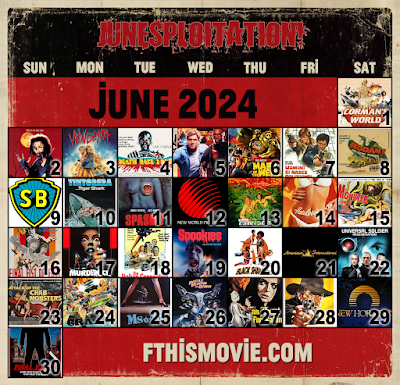
        Hello world! I am crawling out of the void that is tireless research and the world of retail to tell you all about a little challenge called Junesploitation did last month. 

For those who don’t know, Junesploitation is an annual challenge created by the blog FThisMovie! that many genre film fans have participated in over the past 11 years. Each day of the month is given some sort of prompt, and all you have to do is watch something that fits that theme. Most participants go for first time watches, and there is a lot of freedom with your choices; for instance, if you don’t like dumb shark movies, you can literally just watch Jaws or Free Willy. There are also plenty of free space days in order to clean out your watchlist. Planning this, as you can imagine, is quite an event, with Letterboxd lists appearing like it’s Christmas morning.

Out of my 30, I gave a wide range of ratings, from perfect movies to absolute garbage (and not the type you celebrate). What I will be covering isn’t necessarily the best of the best, but things that hooked me in and never let go. Also, I don’t want to retread what has been said about the classics, because chances are you’ve seen Hellraiser and know it’s incredible (yes, that was one of my picks).

Some honorable mentions: Cannibal Man (1972), Foxy Brown (1974), Tourist Trap (1979), Zombi 2 (1979), City of the Living Dead (1980), The Slumber Party Massacre (1982), and Slugs (1988). 

Now, onto my favorites…

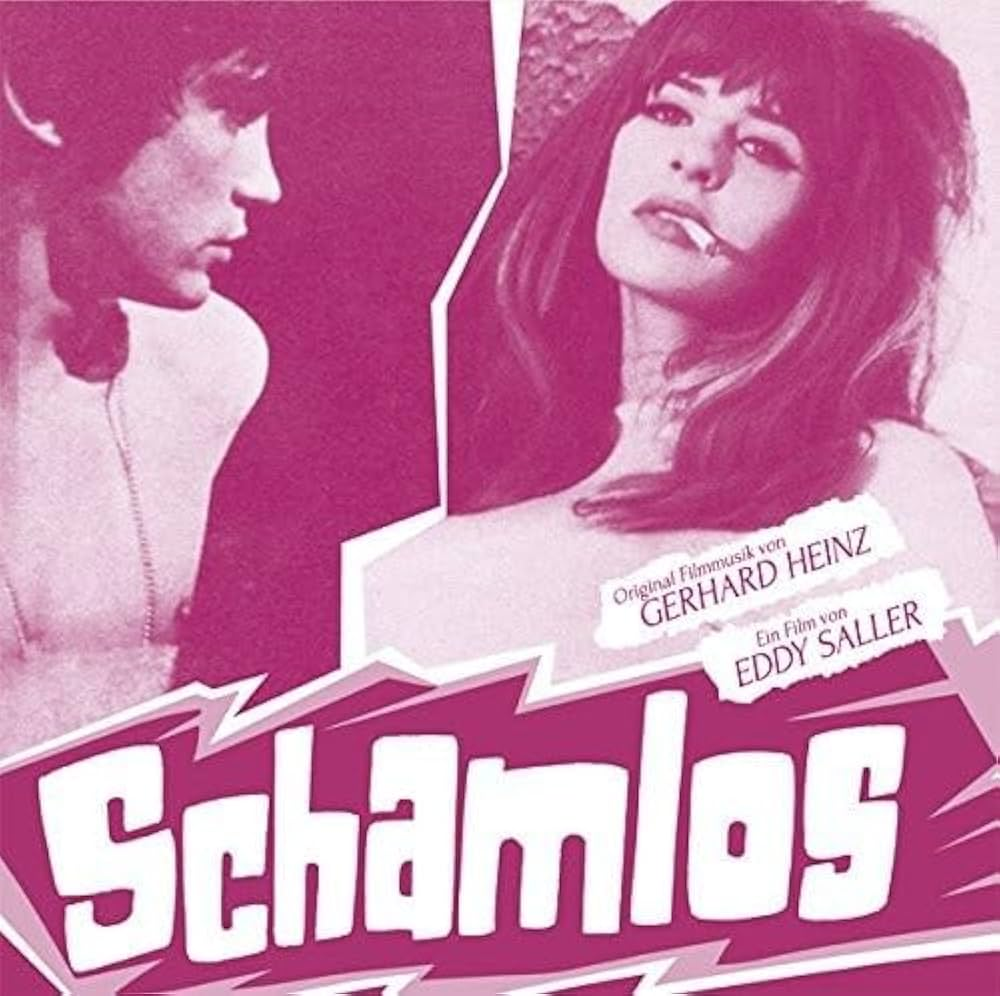
  1. Schamlos (1968): An early European foray into exploitation? Starring my favorite actor ever, Udo Kier? Sign me up! Schamlos was my pick for the gangsters category, and while I’m not a huge crime film fan, this movie had everything. It has a fairly basic plot, with the father of a prostitute teaming up with the urban underworld to find out who killed her. Not all early exploitation films land, but this one sure does, with its fast pacing and appropriately sleazy feel combined with its black and white noir aesthetic. Kier plays a rising crime boss whom the father hires to “interview” potential suspects, and while I was smitten with him as per usual, I would argue he actually has a weaker performance in this. Regardless, if you want a quick watch and are able to find it, this is a great pick.
  2. Your Vice is a Locked Room and Only I Have the Key (1974): You know something is great when you forget incest is incest, and I’m not saying that in a horny schoolboy way. Starring Eurocult icons Anita Strindberg as long suffering wife Irina and Edwige Fenech as visiting niece Floriana, Your Vice is a gothic classic in the vast realm of giallo films. Combine that with Edgar Allen Poe’s “The Black Cat” and an appropriately gross husband who is suspected in the deaths of several young women who attended his parties, and you have a recipe for perfection. Not to be a spoiler sport, but the ending had me saying “good for her” in the best way possible
  3. Salon Kitty (1974): My friends like to joke I’m secretly a Nazi, and I’m sure my love for this film doesn’t help that allegation. Tinto Brass may be known for the wild “period piece” Caligula, however before that, he got to spread his legs (and many others) in Salon Kitty. Hearing the plot of a power hungry Nazi officer usingrecording devices in a brothel to spy on the upper class may not sound like the most appealing thing, but damn, you soon forget about that. And by that, I mean you focus on the incredible cinematography, the extravagant sets, and the oddly well shot softcore bits. This will make you want to dive deeper into Nazisploitation, and is easily one of the best of the genre.
  4. Patrick (1978): Slow burn doesn’t always work. Sometimes, it’s extremely disappointing and leaves you anxious after a terrible resolution. Patrick isn’t that. Perhaps more well known for its unofficial Italian sequel Patrick Still Lives, this Australian flick relies a lot on atmosphere, as psychokinetic Patrick lays comatose, using his powers to harass the nurse assigned take care of him. The main focus of this film is on said nurse, as she tries to convince those around her that Patrick is not a vegetable, and deserves to live, despite the manipulation. Not only does this take several notes from Hitchcock, I felt like it created an interesting spin on medical morals, and when someone is too far gone, not that Patrick is a favorable fella. If you’re going to check out any Ozzploitation, this should be the one.
  5. Bacurau (2019): You’ve probably noticed by this point that my favorite picks are all pre-1990. I don’t have a bias against anything after that, however I do tend to lean towards films from before I was born. This is an exception. I watched this for some late-era Udo Kier (as one does), and ended up roped into a film encompassing many genres that left me shell shocked by the end. Saying any more will ruin this for you. Absolutely took me by surprise and is perfect in every way.
Parker S.

This article first appeared in Tri-Star Trash Cinema, Issue #6

Saturday, June 8, 2024

(Controlled) Chaos: The Glory of United Trash

Have you ever sat down for a film not knowing what to expect and then quickly realized that you’re in for something completely over your head? Not in the snooty art film way, but in the “I’m being hit with a metal chair for over an hour and don’t know how to stop it” way? I’ve had that experience multiple times, but none are as significant as what I went through with United Trash.

Premiering at the Rotterdam Film Festival in 1996, United Trash was one of the last films of Christoph Schlingensief, a German artist who began in filmmaking before transitioning into more performative arts. Going from avant garde attacks on traditional narratives to gross out political comedies about the scars of German history, the one thing that is common across all of his projects is chaos: characters are loudmouthed and uncompromising, the camerawork is often unsteady, and there is something offensive in nearly every scene. It’s a highly divisive style and I would love to devote a full article or podcast episode to Schlingensief and his works, but alas, I have a word limit and cannot spend upwards of five hours recording. However, if you are so inclined (and don’t mind doing a little hunting), I highly recommend Egomania: Island Without Hope, Mother’s Mask, and The German Chainsaw Massacre for further viewing.


United Trash aims to be a wild international satire about gay UN General Brenner setting up camp in Africa and attempting to Westernize the locals. His virgin wife Martha gives birth to a black baby and is recruited into the local anti catholic cult on account of being the mother of the new messiah (aptly named Jesus Peter Panne) before a terrible “accident” disfigures the child. All this is happening while the local dictator has received an old V2 rocket and wants to destroy the Western world and is conspiring with the leader of the cult.

Does that sound like a lot? Don’t worry, it is. Clocking in at 74 minutes, United Trash does not beat around the bush when it comes to squeezing every little detail into it, to the point where it's seeping out of your screen and making a mess on your television set. Much of the imagery in this is truly disgusting and offensive: a few memorable bits include mother-son incest, an unfortunately necessary infant rape joke, a small child (played by a little person) with an oozing vagina-penis on his head, and Udo Kier dancing in front of an audience of locals wearing only his general hat, a banana skirt, and blackface (or black upper body, if you want to get technical). Believe me, there is much more I am omitting. Needless to say it was difficult to promote this on Instagram.

At this point you are probably asking me “what value do you see in this? Isn't this exactly what the title promises… TRASH?” A
nd to that I say, fair. United Trash was one of my first truly shocking films, and about 20 minutes in I felt so overwhelmed in my own room that I needed to take an hour’s walk to decompress. I was quite green coming in, and felt covered in various unknown fluids coming out. I didn’t quite know what to make of it, but it lived in my head for about a month (during October too, when all I care about is Halloween) before I decided to rewatch and take notes. Then,
I got it. I just did. I understood where Schlingensief was coming from, where this sarcastic rage came from, and it was oddly cathartic.

A quote of his that stuck out to me when watching Foreigners Out! Schlingensief's Container, a documentary covering one of his public stunts, was “When I am deeply bugged by something, when something just doesn't seem right, I need to disturb the picture presented as the wholesome and correct one.” In United he is bothered not only by the lasting effects of African colonization, but also the inaction of higher powers when there is trouble. General Brenner is a pervert who is more focused on his pervier boyfriend than the actual mission (whateve
r it may be). Even if he’s bickering with Bishop Pierre, Brenner never does anything to truly curb the effect of an overbearing religion on vulnerable people, and at times even works with them to get his son back. Martha is in hysterics most of the film, being the mother of a supposed savior but being subjected to brainwashing by the Bishop, before realizing that she has quite literally been sleeping with the enemy. And then there is baby Peter Panne… disfigured by the actions of his parents, locked in a hospital for five years, and the center of attention when he comes back. I like to think of him as some fucked up version of Jesus that never really wanted the attention.

The odd part about all of this is no matter how I put it, there is no way to truly encapsulate United Trash. It has become one of my favorite films, and certainly my favorite of Schlingensief’s work. If he were alive today I think he might disagree. Information is scarce, but it seems production was plagued by raids from the Zimbabwean government on suspicion of Schlingensief filming pornography. Schlingensief’s own website claims that between the raids, voodoo dolls, and “deranged main actors”, the production was a lot more entertaining than the resulting film. Regardless, the points United Trash makes on Westernization, the selective nature of the UN, and the realities of colonization still stand today, especially in our turbulent climate. It’s a pity only one German distributor has bothered restoring Schlingensief’s works. I truly think this has a place in the vernacular of what we consider art and trash, and that it’s worth trying to find. Perhaps the best comparison is to a John Waters film: nothing (and I mean absolutely nothing) can prepare you for the experience, and it must be seen to be believed.

Parker S.

This article first appeared in Tri-Star Trash Cinema, Issue #5

Hello world! A Small Introduction

    Well, good morning everyone! I tend to greet everyone like that no matter what time of day it is, a rather odd brand of charming if you will.

    We're two film nerds who started this podcast on a mission to talk about films we like! Sometime's that's mainstream, sometimes not so much. We like our variety around here.

    In life, one of us is a full time student going into pathology and keeps this and music as a creative outlet. The other one works in cyber security and is a parent to two beautiful Bernese Mountain dogs. Listening to the podcast, it's not terribly hard to figure out who is who.

    This blog is for any writing we can not adequately put on the airwaves, which is more often than we might think it is. Articles may include...

  • Reviews of films on and off the pod (Letterboxd doesn't always do the job)
  • Parker's writings for the local film club (can overlap with above)
  • Challenge summaries (we do FThisMovie's Junesploitation and Unsung Horrors' Horror Gives Back, but very well could find new things)
  • Ranting about our favorites when we feel like it
  • Yearly recaps and whatnot 
See you all around!

Parker S.

WIMM Newsletter #3: The Summer Edition

Our upcoming episode features Gerald Thomas's Carry On Screaming! (1966).  We are alive. We are currently editing the episode. You have...